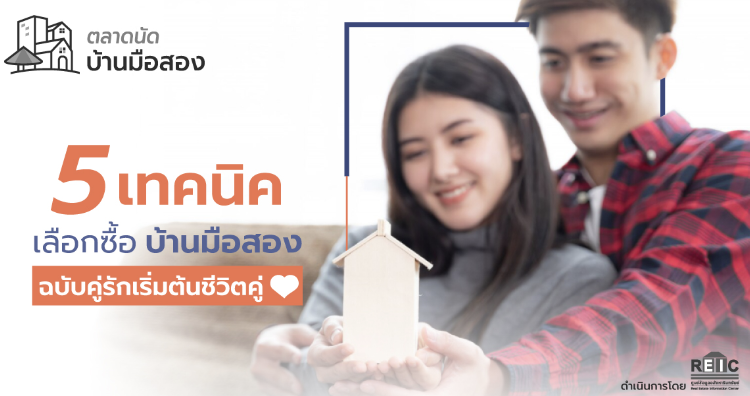
For couples whose love has matured to the point of planning to live together, a “home” is often one of the top dreams. However, finding a “love nest” that satisfies two people with different backgrounds and personalities can sometimes lead to disagreements and minor dramas.
Today, the Second-Hand Home Market would like to offer you some tips on choosing a second-hand home for couples just starting out, to ensure this home-buying journey is filled with smiles and mutual understanding.
Why is a “second-hand home” a good choice for couples starting their life together?
Before diving into the tips, many couples ask, “Why not just buy a brand-new home?” In fact, second-hand homes have unique charms and advantages that suit people building their lives, including:
- Location: Second-hand homes are often located in established communities or near completed BTS (Skytrain) stations, making commuting easier for both partners. This means more time to nurture your relationship and less time stuck in traffic.
- Value for money: At the same price, you usually get more usable space in a second-hand home than in a new one. More space means clearer personal areas for each person, reducing potential conflicts.
- Real environment insight: You can see who your neighbors are, whether the street floods, and if the nighttime atmosphere is peaceful and suitable for relaxation—no guessing like with homes still under construction.
- Manageable renovation budget: The price difference of a cheaper second-hand home can be gradually invested in customizing the home to suit both of your styles.
5 Tips for Choosing a Second-Hand Home That Suits Both of You
Buying a home is one of the biggest decisions in life. To avoid future conflicts, try these 5 tips:
1. Openly discuss your “needs” without secrets
Before browsing listings, sit down together and list out your “must-haves” and “nice-to-haves.” For example, the man might want a gaming or workroom, while the woman might desire a spacious kitchen or walk-in closet. Agreeing on priorities early helps ensure you’re on the same page.
2. Visit and observe the “atmosphere” at different times
Choosing a second-hand home isn’t just about the house itself but the lifestyle. Walk around the neighborhood in the morning and evening, try dining at nearby restaurants, and see if you both feel comfortable—as if on a date. That’s a good sign.
3. Plan for the future (Family Planning)
Even if it’s just the two of you now, buying a home means thinking 5–10 years ahead. Discuss plans for children: Does the house have enough rooms? If elderly family members might live with you, can the downstairs be adapted? Planning together ensures the home suits your long-term needs and reduces the need to move frequently.
4. Thoroughly check the home’s condition (to avoid costly repairs)
One common cause of couple disputes is unexpected repair costs. Before buying, hire a professional to inspect the house or check together for plumbing, electrical systems, cracks, and leaks. Knowing issues upfront lets you negotiate price and plan renovation budgets accurately.
5. Pay attention to “shared” and “private” spaces
No matter how much you love each other, everyone needs personal space. A good second-hand home allows each person to have their own corner—whether a reading nook, garden area, or exercise spot. Having space for individual interests reduces stress and keeps the relationship happy.
Planning joint loans and agreeing on a budget
Money matters affect everyone, especially couples building a family. Understanding joint home loans is crucial.
What is a joint loan?
It means two people become co-borrowers on a mortgage agreement, which increases the loan amount because the bank considers both incomes. This allows you to buy your dream home, which might be more expensive than what one person could afford alone.